L.R. Baggs Marks 50 Years of Acoustic Electronics Innovation—as Founder Lloyd Baggs Returns to His Lutherie Roots
As his namesake company celebrates its 50th anniversary, Lloyd Baggs reflects on his fascinating career, from transforming the world of acoustic sound to crafting custom guitars.

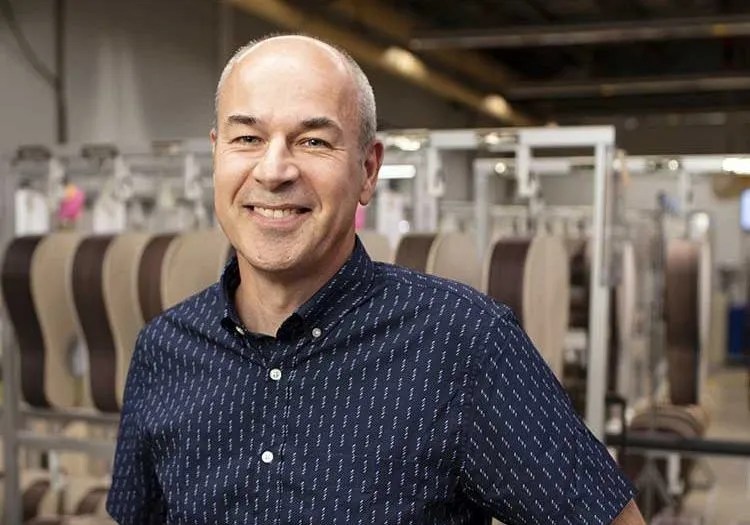
Sitting in the spacious living room of his home on California’s central coast, Lloyd Baggs exudes the air of an old-school craftsman. As he peers through thick-rimmed glasses from beneath a gray baseball cap, his handsomely weathered face radiates both hard-earned wisdom and good humor; a trim white goatee only adds to that impression. If you didn’t know what Baggs did for a living, you might guess he made high-end furniture or built schooners by hand.
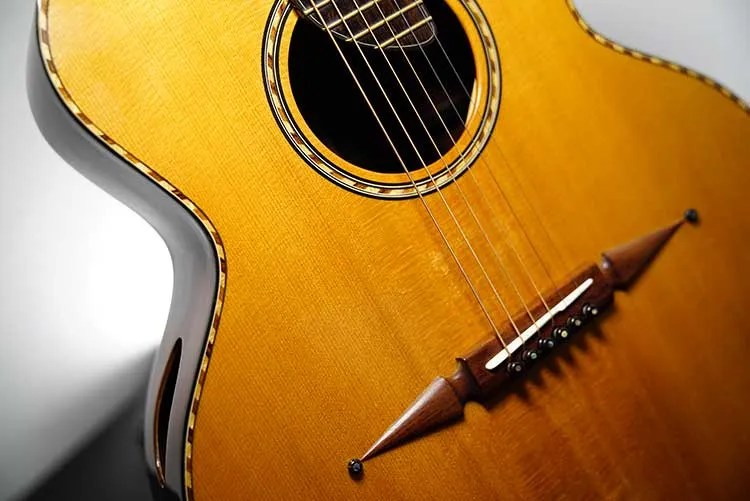
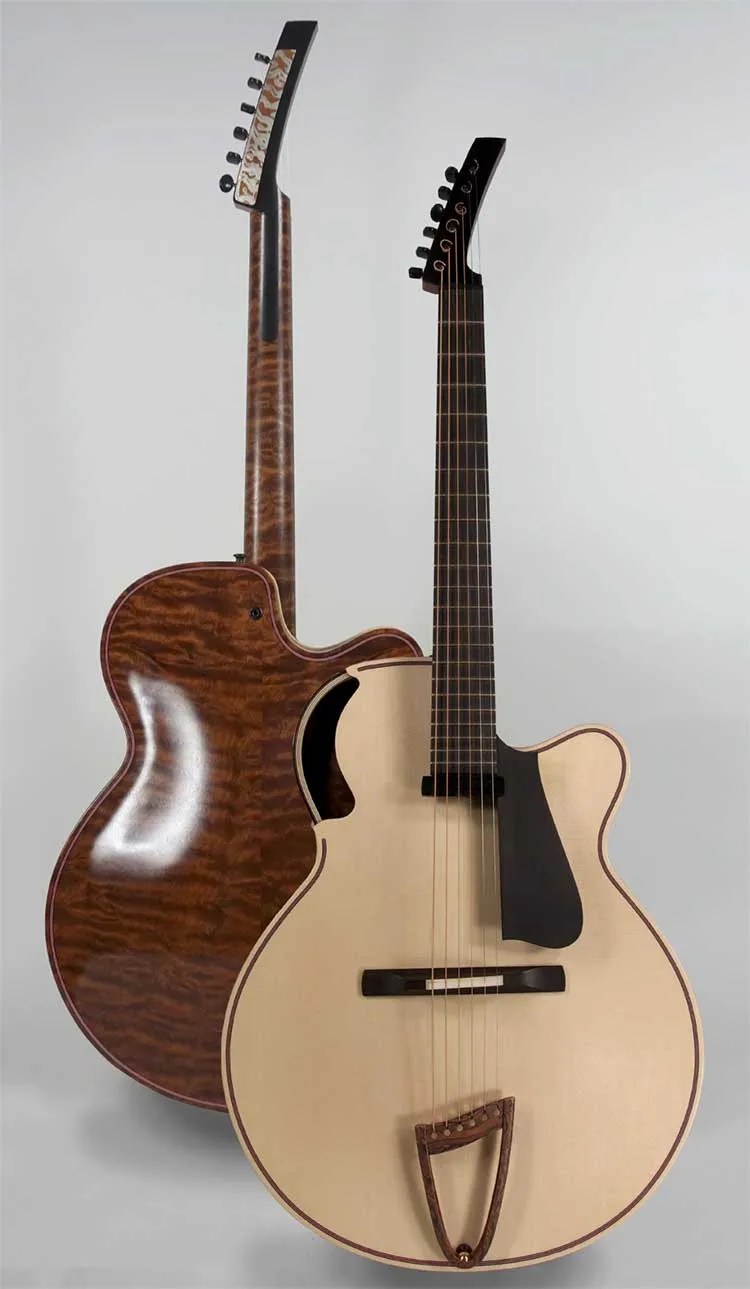
Guitar aficionados, of course, don’t need reminding that Baggs is the tone-obsessed founder of L.R. Baggs, a company whose pickup systems—such as the LB6, the Duet, and the Anthem, to name but three—have permanently altered the world of acoustic guitar amplification. Yet even those in the know may not realize that Baggs isn’t just about pickups. Many industry followers were caught off guard recently when the company released its own acoustic guitar, the AEG-1 (see review here). But was this really such a surprise? After all, Baggs started out in the 1970s as a guitar builder, with clients like Ry Cooder and Jackson Browne, and in the late ’80s he designed Godin Guitars’ groundbreaking Acousticaster (or, as he prefers to call it, the “Telecoustic”).
In 2025, L.R. Baggs celebrates 50 years in the business. Reason enough to sit down with the man himself, a raconteur par excellence, and discuss his colorful career.
Congratulations on your 50th anniversary. I’ll assume that back in the mid-’70s, you weren’t thinking you’d be here five decades later.
No, that’s for sure. At that point I could hardly find my ass with two hands and a flashlight! So I feel pretty dang fortunate to have survived and thrived.
You started off playing cello, right?
Yeah, I was on a professional career path as a cellist. My teacher was Joseph DiTullio, first chair of the L.A. Philharmonic. He also did work for [the studio orchestra of] 20th Century Fox, and he said he was going to start subbing me on dates that he couldn’t take. Then I broke my left hand very badly in a fistfight. I’m not sure it needed to be a career-ending injury, but it certainly put me off the thing for a number of years. In the meantime, I was in college having a blast, and whatever I was doing then seemed more interesting than playing cello.
And then you picked up guitar?
First I tried to play harmonica, and I was terrible. Then I tried to play guitar, and I was not quite as terrible. Still pretty bad, though. But I was a pretty good woodworker—I was into Japanese joinery and building things without fasteners—and I got interested in building guitars. So I bought some wood, and a book that gave you some ideas. I had this beautiful oval-hole carved-top American Washburn that I thought was the best thing I’d ever seen, and I set about copying that. After six months in my garage in Berkeley, I emerged with this thing that is a testament to glue and clamps. I had it on my wall for years, and every time I’d walk by it I’d wince, expecting it to explode.
ADVERTISEMENT
Your day job back then was printmaking.
I was a fine-art lithographer. I’d work with artists to create limited-edition prints, and one of those artists was Ry Cooder’s [then] wife [Susan Titelman]. Through her I got to know Ry. One day I showed him the guitar I’d made, and he asked me to build one for him. I said, “Twist my arm a little harder,” and my career as a builder was off and running.

Building guitars, not pickups.
Right. But I was always interested in tone. And the thing that struck me was that in every book I could get my hands on about building guitars, the chapter on tone was like two or three pages long and basically said, “Good luck.” With my cello background, I had this idea that there might be more knowledge in violin making than in acoustic guitars. I became a part of this group called the Catgut Acoustical Society. These were scientists who were trying to reverse-engineer Stradivarius violins by analyzing their vibrations. I mean physicists, electrical engineers, pretty heavy people. I tried to duplicate the tests they were doing, and that eventually was a tremendous help to me in understanding how a pickup worked or didn’t work.
What turned you from a guitar builder into a pickup manufacturer?
That also goes back to Ry. He called me from the Warner Brothers studio one afternoon—I’d just finished a second acoustic guitar for him—and he said, “Come down here, there’s something I think you need to see.” So I go in, and he plays me a track from [what eventually became Cooder’s 1979 album] Bop Till You Drop. My jaw was on the floor. I’d been putting pickups in his guitars that I’d made, and he had this rack the size of a refrigerator that he traveled with to try and make everything work, but mostly he just swore at it.
I think that’s called on-the-job training.
Life on the cutting edge of acoustic amplification! So anyway, I said, “How in the heck did you record that guitar? It sounds incredible.” I thought he was using my new guitar. Ry says, “Well, that’s what I wanted to show you.” He’d been touring Japan a year or so before and he’d visited the Takamine factory. The guitar on the track was a Takamine, not mine. He said, “This is pretty good, isn’t it? Certainly better than what we’ve been doing. I thought you needed to know about it.”
Trying to be helpful, I guess, but maybe a bit harsh.
I was the funniest combination of elated and crushed that could probably exist between one person’s two ears. I went out and sat in my car for about 30 minutes, letting the whole thing soak in, and I decided right then and there, “Okay, this is the future of acoustic guitar, and I need to be part of it.” So at the very next NAMM show, I met with [Takamine’s then president] Mr. [Mass] Hirade and basically negotiated that he would sell me ten pickups a year for the guitars I was making. He said, “That’s all you want?” I said, “Yep.”
A few months later, here come a couple of Takamine pickups, and of course I had to take one apart, and I just went, “That’s all there is to it?” Little did I know then how sophisticated it really was. But those pickups were in an aluminum housing so big that . . . well, you’d never put one of those in a nice guitar. I said, “Crap, I’m not gonna use this,” and I set about reverse-engineering the thing. In about a year, I had the LB6. All I was trying to do was clone the Takamine sound, but in a form that you could put in a Martin or Gibson or Taylor and wouldn’t ruin it.

And that was the turning point?
ADVERTISEMENT
Well, along the way my wife and I had our first child, and I stopped building. Oh man, I kept Jackson Browne waiting a year for a guitar, and I pissed off my whole waiting list. I decided I didn’t want to build guitars anymore. And so I was broke. I took a job selling cars for four years while I put the business back together: working on the pickups, trying to figure them out, taking them to music stores, selling them one by one.
What enabled you to get going full time again?
Making an OEM [original equipment manufacturer] deal with Taylor was foundational. But then we had what we call the black summer of ’87, where we started having epoxy failure. About every other pickup we sent out was breaking. It took three or four months to figure out what was going on. Bob [Taylor, co-founder of Taylor Guitars] called me up one morning and said, “I hate to do this, and I hope you solve the problem quickly, but dude, I gotta go with [pickup manufacturer] Larry [Fishman of Fishman Electronics]. We can’t keep this up.”
How awful.
It was scary. But shortly after that, Robert Godin [of Godin Guitars] called me and said, “I’ve been hearing your pickups, and I really like ’em. Will you sell some to me?” I said, “Sure,” and he said, “Do you have a preamp?” I said, “What’s that?”
I sense a new product line emerging!
I wasn’t an electronics guy; I was a mechanic. So I hired Jim Demeter to design our first preamp and found a local supplier to build it, because I wasn’t gonna build it in my garage. That was big for us. Robert saved our ass. And then, really just as a way to sell more pickups, I came up with the “Telecoustic” guitar. Because of all the experiments I’d done in trying to understand resonance, that guitar sounded more realistic than any previous acoustic-electric. I taught Robert how to build it—I still didn’t want to go back to building guitars—and he put my name on the headstock for a while. That really saved our ass.

Fast-forward a couple of decades. What led you back into making guitars after all this time?
About ten years ago, we got honest with ourselves and realized we were tired of being the red-headed stepchild to the electric guitar when it came to fun. A ten-year-old kid can go into Guitar Center, grab an electric guitar off the wall, plug it in, and have a shit-eating grin on his face in 30 seconds. That’s not the typical acoustic live experience, right? Which is a little more like getting a root canal. How can we close that gap and make it pleasurable?
ADVERTISEMENT
Every couple of years, I would take a week and build, trying to figure out what the heck is it that can make an acoustic-electric sound like a regular guitar. I can’t say I’d gotten a lot closer, other than eliminating stuff that didn’t work. But then when the pandemic hit, we all started working from home for a while, and this 1,000-square-foot building we have on our property was now my personal shop. So I started building and . . . have you ever heard the term nut bowl?
I don’t think so.
Within the trade, acoustic-electric guitars are known as nut bowls. They’re like the first thing you make in shop class—a chunk of wood that’s hollowed out and you slap a top on them. The first three or four guitars I built were nut bowls. Okay, but not great. Then I realized that the back had to vibrate, like the second skin on a kick drum. It takes more than the vibration of the top to fill out a decent acoustic sound. But if I want the back to be really alive, how am I going to anchor the neck? On a regular acoustic guitar, it’s the back that holds the neck and keeps it from caving into the top.
And your solution was to attach the neck to the sides of the guitar rather than the back?
That’s right. Putting a support inside the body that anchored the neck to the waist allowed us to voice the top and the back independently of needing to hold the structure, which gave us a lot of freedom. It also held the neck so rigidly that it drove more energy into the top, so it’s got a really wide dynamic range. When you’re amplifying something that actually has some fidelity, you get better results.
How’s the response been to the AEG-1 so far?
ADVERTISEMENT
For most people, it came out of nowhere. I wasn’t known as a builder anymore. But it’s been getting five-star reviews. People are . . . I’d say “dumbfounded” would be an accurate term. And even the companies we have OEM deals with are like, “Right on!” You know, we’re not threatening anybody. It’s in its own space. Although [Martin executive chairman] Chris Martin came up to me at the NAMM show this year with this funny-looking grin on his face and said, “I hear we’re competitors now.” [Laughs] Yeah, right! Maybe in another 100 years, Chris.
Fifty years in and you’re still excited. That speaks to the continued vitality of the company.
Well, we get to work with a lot of talented people, so that keeps us jumping. And our culture is just basically curious. I feel like God gave me a certain talent, and it’s my gift to him to use it up. Whatever’s left, I don’t want to leave a nickel on the table.

This article originally appeared in the May/June 2025 issue of Acoustic Guitar magazine.