
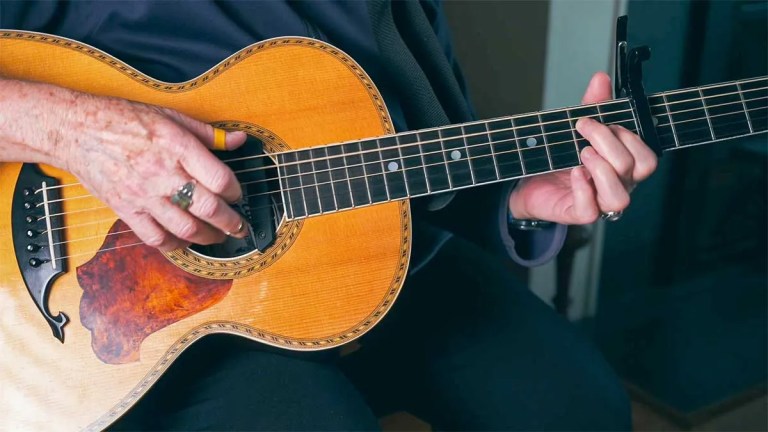
Explore Open-D Tuning with Mary Flower’s Colorful Arrangement of “Dink’s Song”
With its simple, movable chord shapes—many requiring just two fingers—open-D tuning adds a shimmering quality to this traditional song.

With its simple, movable chord shapes—many requiring just two fingers—open-D tuning adds a shimmering quality to this traditional song.
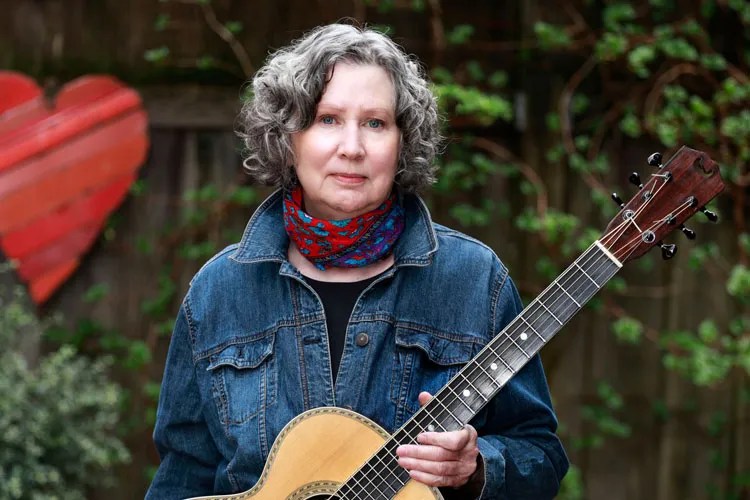
“Most of the time I have no idea how the music comes from my fingertips while writing. It’s not like I’m going for some genre or sound. It just happens!”
ADVERTISEMENT
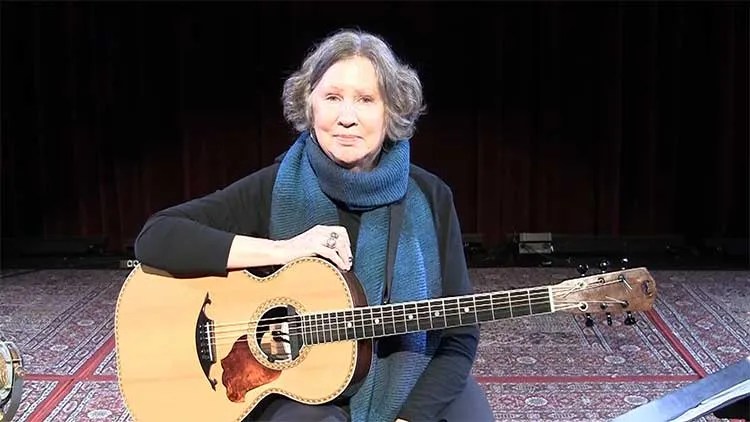
Guitarist Mary Flower demonstrates how to play melodies and bass notes at the same time on acoustic guitar via an exercise she calls "Nimble Fingers."
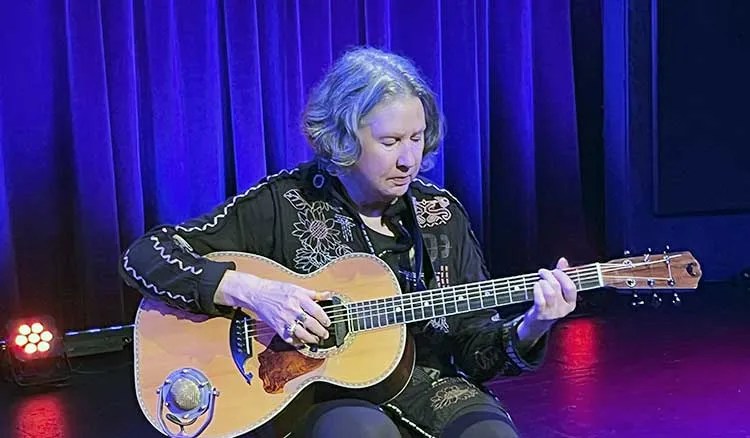
In this guitar lesson, learn to play a monotonic bass line, then apply it separately to three chords in the basic 12-bar blues progression.

In this guitar lesson, get a taste of open tunings by lowering your strings to open D minor, then playing a handful of chord shapes and applying them to a bluesy etude.
ADVERTISEMENT
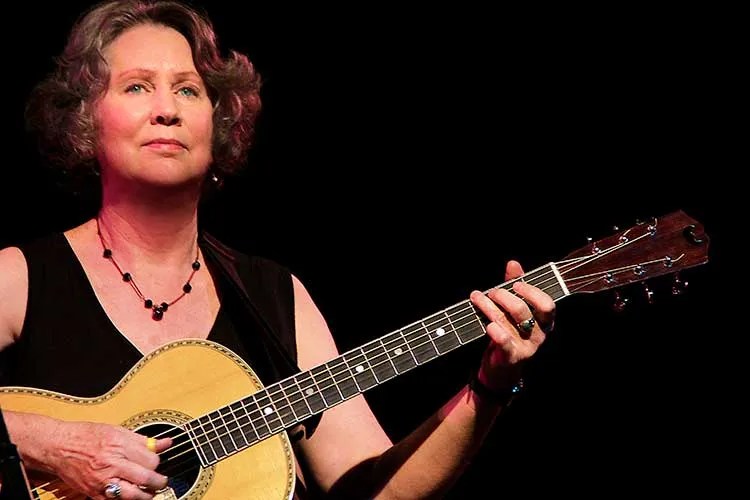
For a gentle introduction to ragtime, I composed a simple G-major instrumental, “Davis Street Rag,” in which the syncopation always occurs in a predictable place, the “and” of beat three.

In this lesson, I’ll show you how to play an approachable ragtime piece of mine in open G6 called “Liberal Rag,” a title I chose not necessarily as a political statement but to indicate that it can be played at an easy and relaxed tempo, by players at all levels.

In the following exercises, you’ll find some great phrases and chord patterns that make extensive use of the dead-thumb approach.
ADVERTISEMENT

Often called Piedmont guitar—after the East Coast regions, running from Virginia to North Carolina, where many of the players lived—this challenging style makes use of an upbeat fingerpicking technique, which I’ll break down for you in this lesson.

