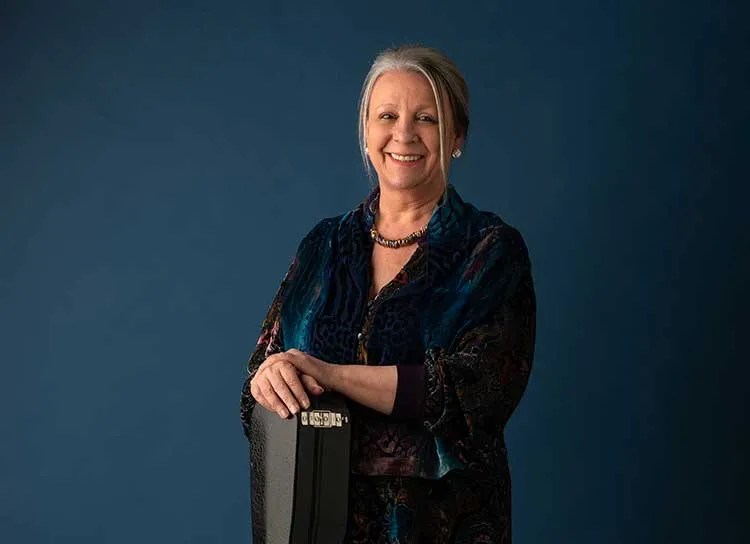
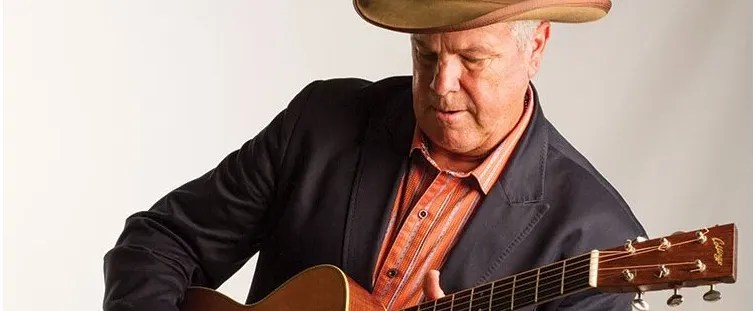
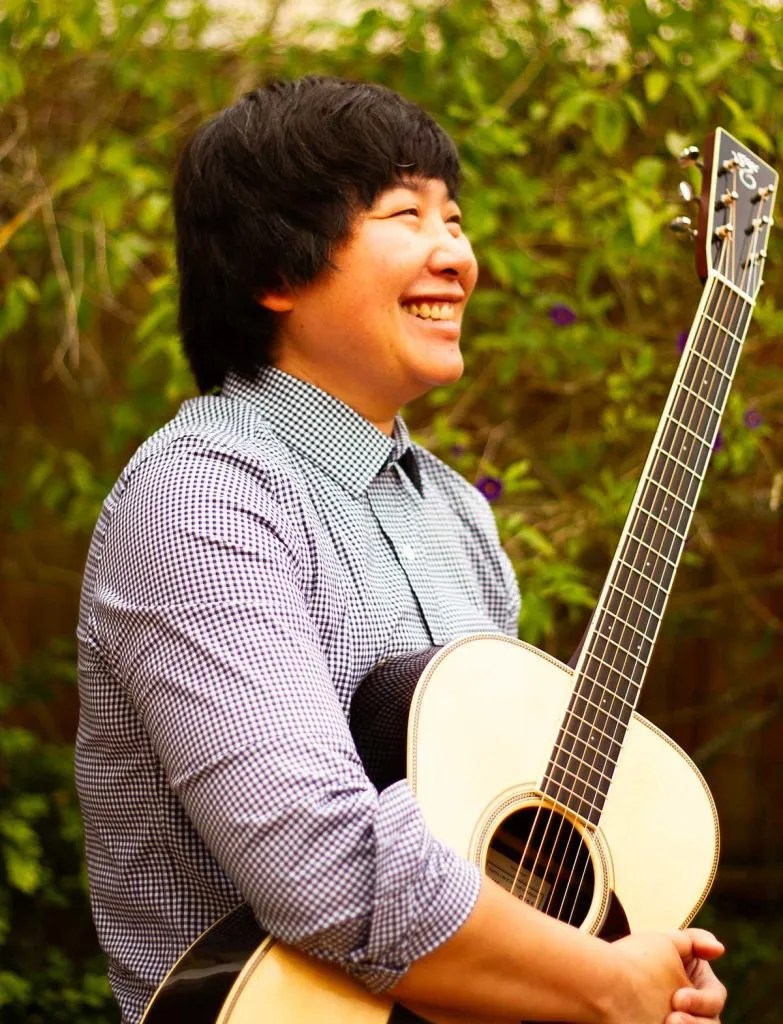
Isa Burke, Lisa Liu, Mamie Minch, Sean McGowan, and Thu Tran Share Musical Insights in New Artist-Led Lesson Series
Meet the team behind Acoustic Guitar's new Teaching Artists series.

With online education now deeply woven into the fabric of music learning, today’s guitar students have access to instruction that was once available primarily through conservatory programs or specialized workshops. But for all the polished tutorials and algorithm-friendly content circulating online, something essential often goes missing: the human touch. That’s what makes the new Acoustic Guitar Teaching Artists series, hosted on Patreon, worth a closer look. The focus isn’t only on technique—what makes these lessons meaningful is the emphasis on connection, curiosity, and the kind of practical knowledge that comes from years of real-world playing and teaching.
Each of the five artists in the series brings a distinct approach. Isa Burke draws from a life immersed in folk traditions, emphasizing ear training and rhythm guitar as gateways to fluency. Lisa Liu, whose background spans classical piano, punk, and jazz, teaches with precision and calm, guiding students toward thoughtful growth. Mamie Minch shares her expertise in vintage blues and guitar repair with a direct, grounded teaching style. Sean McGowan offers a comprehensive method built on fundamentals that apply across genres. And Thu Tran, a self-taught player and songwriter, invites students to engage their intuition and take learning one step at a time.
Together, these artists offer a wide view of what it means to learn guitar—focused, exploratory, and always grounded in musical listening. In this feature, learn more about their backgrounds and teaching approaches, and sample their lesson offerings.


Isa Burke
Teaching the Ear to Lead the Hands
Raised in a musical household in southern Maine, Isa Burke (isaburke.com) was surrounded by instruments and encouragement from the start. Her parents, Susie Burke and David Surette (a longtime AG contributor), were both professional musicians and teachers, and their home was filled with sounds—from folk songs to Broadway musicals to the Beatles. “We had a bunch of guitars and ukuleles around the house,” she recalls. “We were always encouraged to just pick them up and mess around.”
Burke was a founder of the indie folk trio Lula Wiles, which released three albums on Smithsonian Folkways and toured internationally. An in-demand multi-instrumentalist, she has performed extensively with Aoife O’Donovan, the Mountain Goats, Carsie Blanton, Darlingside, and many more.
Now based in Durham, North Carolina, Burke draws on her background in traditional music to help students develop their listening skills and confidence. Her lessons emphasize rhythm guitar, chord shapes, and number systems—tools that make it easier to connect and communicate with others. “One of my main goals is to give people the skills to play with others and learn by ear,” she says. “That’s what so many people actually want. It’s not just about playing a solo; it’s knowing what to do when you’re at a jam.”
Burke’s own learning was shaped by years of playing in sessions where music moved fast and notation wasn’t an option. “In an old-time jam, you’re learning a 32-bar fiddle tune as it’s being played at full tempo,” she says. “That kind of learning shapes how I teach—by encouraging people to trust their ears and instincts.”
As such, Burke avoids heavy reliance on written materials, instead guiding students to understand how music works through functional harmony and scale degrees. “It’s not about playing the fanciest thing,” she says. “It’s about being able to lock in with the people around you.”
ADVERTISEMENT
Burke sees her role not as a coach pushing toward mastery, but as a guide helping students make sense of the music they care about—to help people engage with the music they love in a deeper way. “It’s not about impressing anyone,” she says. “It’s about connection.”
Syncopated Simplicity
In this excerpt from a lesson on fundamental rhythm approaches, Isa Burke demonstrates a syncopated strumming pattern on an open E chord, incorporating a suspended fourth (A) for added motion and color.

Lisa Liu
Practicing Slowly, Playing Boldly
As a musician, Lisa Liu has not followed a straight line. She started out studying classical piano, moved into acoustic guitar as a teen, and later performed in punk and experimental bands in New York. “After ten years of playing in loud rock bands, I got tinnitus,” she says. “At first it was devastating. But it brought me back to acoustic guitar and jazz, which I had always loved but never fully pursued.” She has since released two jazz albums, Introducing Lisa Liu and Temperance.
Currently based in San Francisco, Liu works with students of all levels, emphasizing clear practice habits and thoughtful pacing. She helps players focus on tone, timing, and musical intention rather than rushing through material. “Practice the songs you love,” she says. “And slow it way down. There’s no shame in that.”
Liu’s approach to slowing down creates room for close listening and greater physical awareness. She encourages students to notice how their hands move, how a phrase feels under the fingers, and how each note responds to touch. Tone, in her view, isn’t a surface detail but foundational. “It’s really important to me that I get the tone I want from my fingers before I even plug into anything,” she says.
A phrase Liu often returns to comes from her first piano teacher: “If something doesn’t click, break it down and do it three times in a row.” It’s a simple method, but it underpins much of her playing and teaching. “That’s how I’ve built everything in my playing,” she says. “And that’s what I try to pass on.”
Liu also emphasizes the value of playing an instrument that feels inspiring and easy to connect with—something that invites you to pick it up every day. For her, that’s meant turning to a Santa Cruz OM for fingerstyle playing, a Larkspur Lutherie manouche for Gypsy jazz, and a Sadowsky archtop for electric ensemble work. “Finding the right instrument is so important,” she says. “You spend so much time with the instrument—it becomes your teacher.”
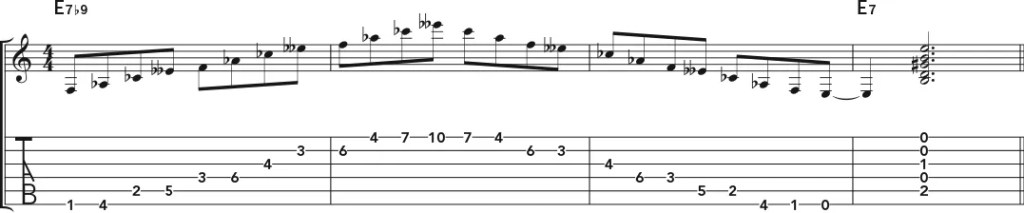
Diminished Drama
In this excerpt from her lesson on diminished harmony, Lisa Liu shows how to use an F diminished seventh arpeggio (F–Ab–Cb–Ebb) to outline an E7b9 chord (E–Gb#–B–D–F) and effectively create tension and release.
Mamie Minch
Hands in the Blues
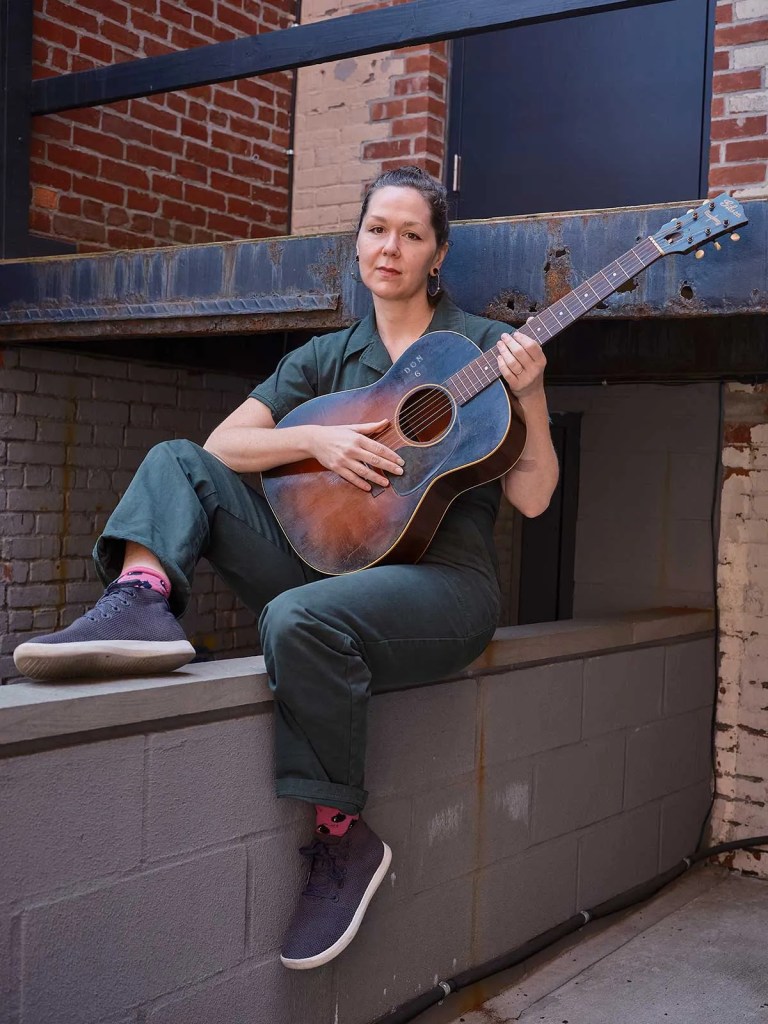
Mamie Minch (mamieminch.com) came to the blues early, drawn in by songs that sounded timeless and outside the mainstream. She says, “I’ve always loved songs that sound like they don’t belong to any one era—like they could have been written 80 years ago or yesterday.”
ADVERTISEMENT
Minch started learning chords from her father and quickly took to fingerpicking. After moving to New York to study fine art, she found a community around early blues recordings and vintage instruments. “That’s when I knew I had people,” she says. “There was this scene of folks playing old songs on beat-up guitars, and I fit right in.”
Her knowledge of instruments deepened while working at RetroFret in Brooklyn. She started in sales, moved into repair, and eventually co-founded a restoration shop, Brooklyn Lutherie. “I’ve touched a lot of guitars,” she says. “And I still find them magical.”
Minch’s teaching is shaped by the same attention she brings to instrument repair: a close understanding of how things fit together, how structure supports function, and how wear and quirks can make something more expressive, not less. As she’s learned the inner workings of old guitars through years at the bench, she’s spent just as long digging into the mechanics of music—what gives a groove its shape, what makes a turnaround satisfying, how small choices affect feel. “Guitars are just wood and glue—but they’re also vessels for people’s dreams,” she says.
What Minch hopes to pass on is a sense that the guitar isn’t reserved for experts or traditional learners—it belongs to anyone curious enough to sit down with it. Her lessons often begin with simple patterns and gradually layer in nuance, encouraging students to trust their hands and ears. It’s not about mastering a style so much as getting comfortable enough to make it your own. “I want people to feel like this is an instrument that’s for them,” she says.
Dropped-D Drive
Mamie Minch demystifies a down-home groove in dropped-D tuning—a pattern that adds weight, swagger, and stylistic authenticity to acoustic blues playing.

Sean McGowan
No Finish Line
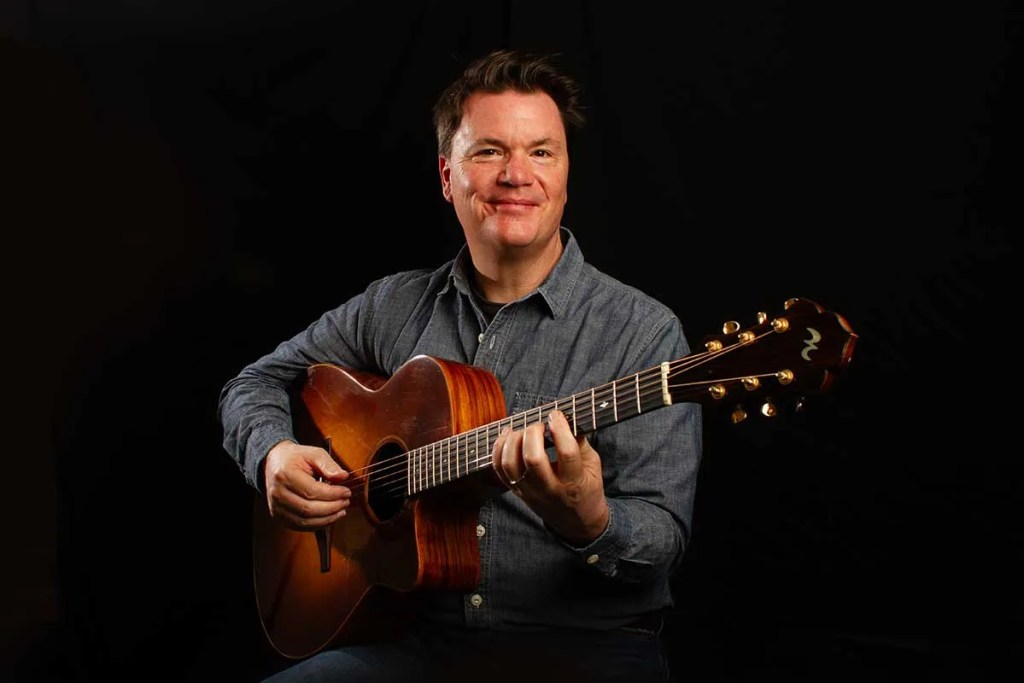
Sean McGowan (seanmcgowanguitar.com) is a leading figure in the world of jazz guitar—a composer, educator, and fingerstyle virtuoso whose work bridges tradition and innovation. For many years, he has served as music professor at the University of Colorado Denver, where he helps students develop the foundational skills needed across musical styles. His teaching emphasizes tone, timing, dynamics, and coordination. “The fundamentals are the same whether you’re playing jazz, folk, or bluegrass,” he says. “When students get curious about a style or a player, then we dive deep.”
McGowan’s lessons draw from a career shaped by both performance and scholarship. His discography includes acclaimed solo albums such as Portmanteau, Union Station, and Sphere: The Music of Thelonious Monk, each reflecting his interest in arrangement and personal interpretation. His instructional books include The Acoustic Jazz Guitarist and The Holistic Guitarist: A Complete Guide to Musical Well-Being, which blends technique with insights on long-term creative and physical health. “I try to pack a lot into each lesson,” he says, “but I also try to kindle someone’s love of playing.”
McGowan is also a longtime contributor to AG, where he has written extensively on jazz concepts and techniques. His involvement in educational platforms such as TrueFire and ArtistWorks has also allowed him to reach students far beyond the classroom. He values the flexibility of online instruction, especially for those balancing learning with other parts of life. “You can go at your own pace, revisit lessons, create your own rhythm of practice,” he says. “It’s low pressure, but potentially really deep.”
At the heart of McGowan’s teaching is a mindset of continuous learning. “There’s no finish line,” he says. “The more you learn, the more there is to learn. That’s what keeps it exciting.” He aims to leave students energized. “My goal is that someone finishes a lesson and wants to pick up the guitar again,” he says.
ADVERTISEMENT
Seventh Sense
In this excerpt, Sean McGowan walks through the diatonic seventh chords in the key of F major, illustrating how to visualize harmony across two different string sets.

Thu Tran
Curiosity Over Correctness
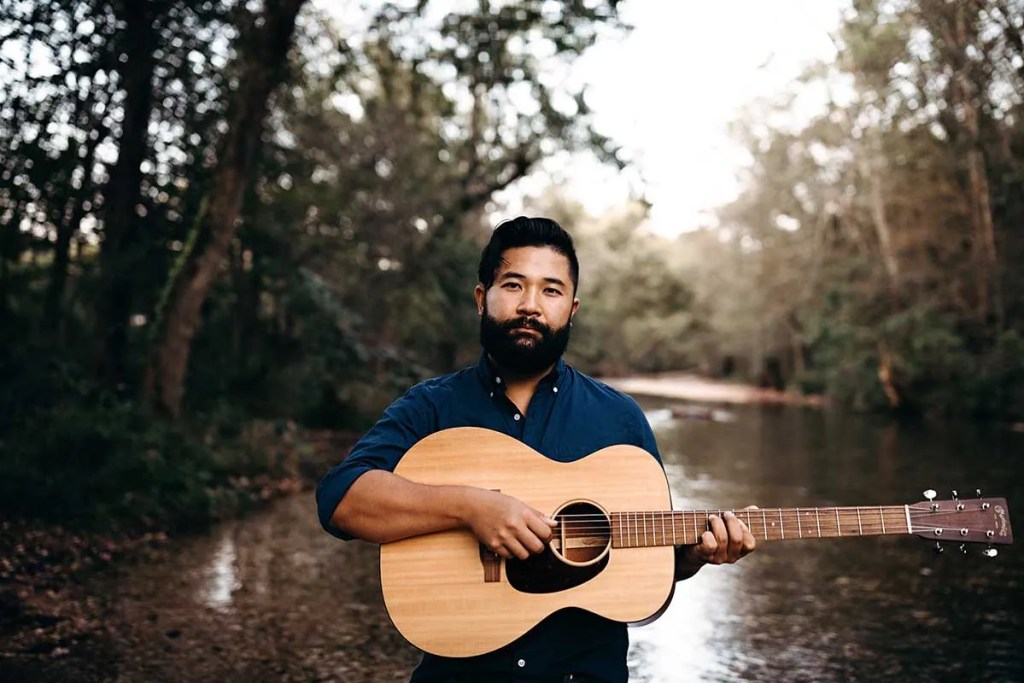
Thu Tran (thesingerandthesongwriter.com) didn’t come up through formal training. His first guitar—“a busted Yamaha with no strings,” as he recalls—was a gift from a friend, and just getting it into playing shape was its own kind of lesson. He strung it up, learned a few chords, and wrote a song for a high school class—a beginning that set the tone for his self-directed, improvisational approach to music.
Based in Oakland, California, Tran has followed an unconventional path shaped by listening, imitation, and a persistent curiosity. That same sensibility informs his work with the Singer and the Songwriter, the project he co-founded with vocalist Rachel Garcia. The duo’s music resists easy categorization, balancing spare, melodic arrangements with a quiet attention to lyrical detail, and has found an audience drawn to its understated clarity.
Tran’s teaching reflects the eclectic, intuitive nature of his musical life. Rather than following a set curriculum, he encourages students to stay open and exploratory. “The guitar’s a map with lots of little side paths,” he says. “There’s no one right way to play.” He also views mistakes as essential to growth. “I think of them as a path toward precision,” he explains—not something to correct too quickly, but a chance to slow down and learn what they might be pointing toward.
Mindset plays a big role, too. On Tran’s pedalboard is a strip of tape that reads “Play boring,” which he leans on frequently. “It reminds me not to perform. When I try to sound impressive, I clamp up. When I just play something simple and true, the music starts to flow.”
ADVERTISEMENT
Since the pandemic, Tran has been teaching online, working with students of all levels in a welcoming, low-pressure environment. “Whatever your level, whatever your goals—there’s room for you,” he says.
Feel-First Picking
Instead of teaching Travis picking as a rigid pattern, Thu Tran encourages students to vocalize the rhythm and assign picking fingers organically—an approach that makes the groove feel natural from the start.


This article originally appeared in the July/August 2025 issue of Acoustic Guitar magazine.